Remote Construction Camp Power Solution: Reducing Diesel Dependence with Hybrid Energy Storage
Location: XJ, China
Application: Remote Construction Camp / Off-Grid Power Supply
System: 2 × 125 kW / 225 kWh Hybrid Energy Storage Systems
Energy Sources: PV + Battery Energy Storage + Diesel Backup
Application Type: Off-Grid / Microgrid / Remote Power Supply
Reliable Power for a Remote Construction Site
Remote construction sites often face a common challenge: reliable electricity is difficult to access, while diesel generators are expensive to operate continuously.This project was deployed at a remote construction camp in Xinjiang, where grid access was unavailable and the site had traditionally relied on diesel generators for electricity.The limitations were significant. Diesel fuel costs were high, generator operation was restricted to specific periods, and interruptions in power supply could directly affect accommodation, lighting, office equipment and construction activities.The project therefore required a new power architecture that could provide stable, uninterrupted electricity while significantly reducing diesel generator operation.The solution combined photovoltaic generation, battery energy storage and diesel backup into a hybrid off-grid power system.
The Challenge: Reliable Power Without Grid Access
The construction camp was located away from the conventional utility grid and could not obtain a direct grid connection.The original power supply depended heavily on diesel generation, resulting in several operational challenges:
- No reliable utility-grid connection was available.
- Diesel fuel represented a significant operating expense.
- Generator operation was limited to several daily time periods.
- Power interruptions affected workers’ accommodation and site operations.
- Starting and stopping diesel generators repeatedly increased operational complexity and equipment wear.
- The project required a stable power source capable of supporting the construction camp throughout the day.
The key requirement was therefore straightforward:Provide continuous power while minimizing the use of diesel generators.
The Solution: PV + Battery Energy Storage + Diesel Backup
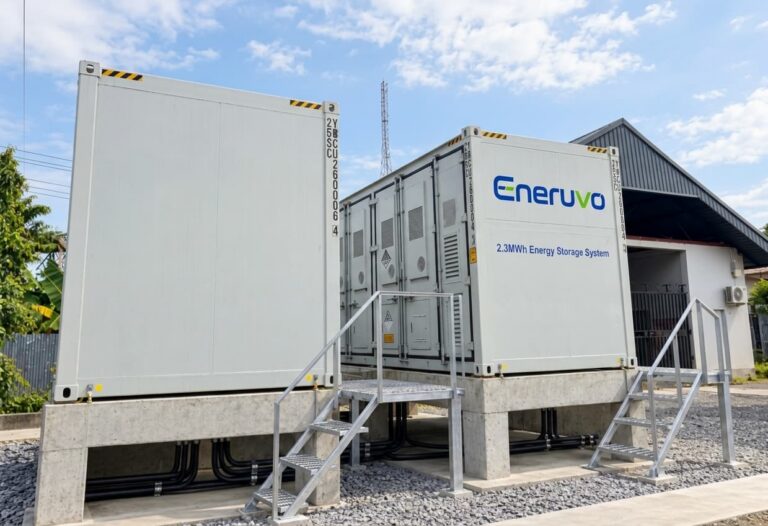
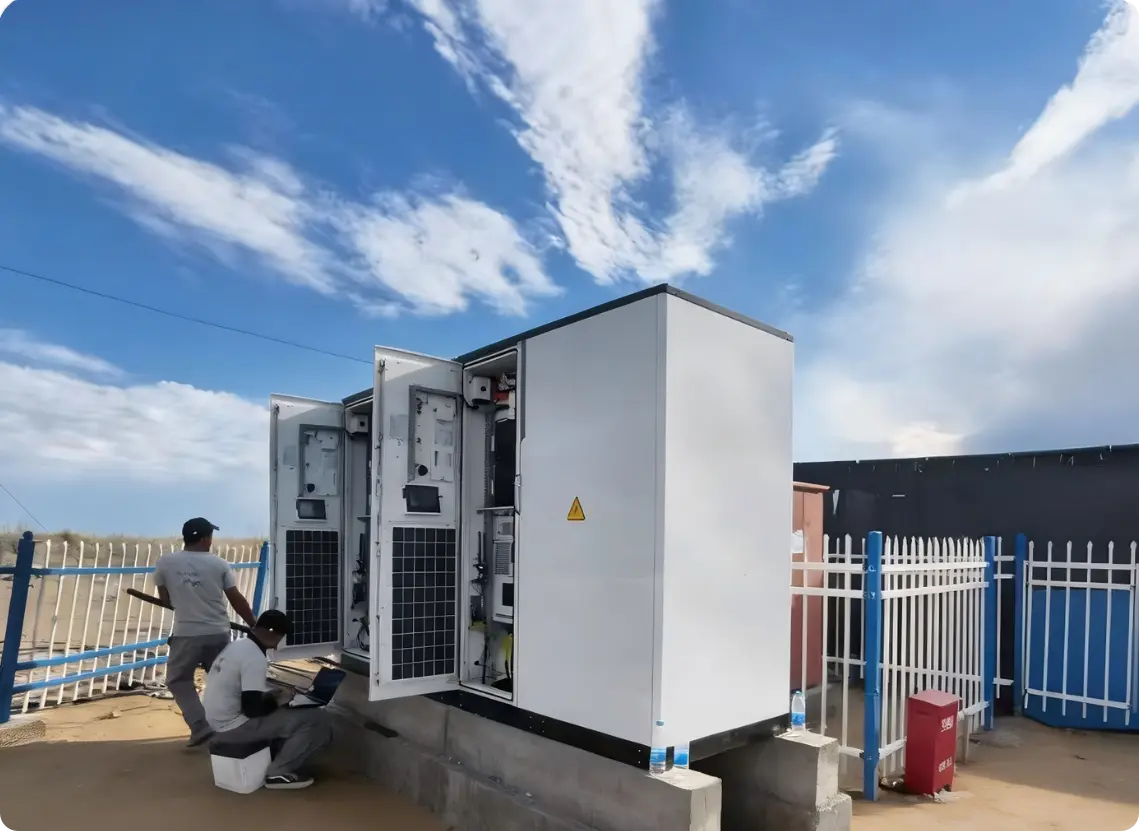
The project deployed two 125 kW / 225 kWh hybrid energy storage systems.The systems were configured as the primary power source for the construction camp, with available solar energy integrated into the energy management strategy. The existing diesel generators were retained as emergency backup power rather than the primary source.
System Configuration
| Component | Configuration |
|---|---|
| Hybrid Energy Storage System | 2 units |
| Rated Power | 125 kW × 2 |
| Battery Capacity | 225 kWh × 2 |
| Solar Generation | Integrated with the energy system |
| Grid Connection | Not available |
| Diesel Generator | Emergency backup |
| Application | Remote construction camp |
The architecture enables the site to operate primarily on solar energy and battery storage, while the diesel generator remains available when exceptional conditions require additional backup power.
How the System Operates
During periods of sufficient solar generation, PV power supplies the site loads directly while surplus energy can be used to charge the battery system.The battery then supplies electricity when solar generation is insufficient, including during periods of low solar production and at night.The diesel generator is no longer required to operate continuously. Instead, it functions as an emergency backup source and can be activated when the battery state of charge or operating conditions require additional support.This creates a practical operating sequence:PV → Load + Battery Charging → Battery Discharge → Diesel BackupThe result is a hybrid microgrid that can maintain stable electricity for the construction camp without relying on continuous diesel generation.
Key Advantages of the Energy Storage Solution
1. Continuous and Stable Power Supply
The battery energy storage system provides a stable power source for critical construction-camp loads.The system is designed to support seamless power continuity, with switching performance specified at less than 20 ms in the original project material.This is particularly valuable for remote sites where even short power interruptions can affect communications, office equipment and essential electrical loads.
2. Significantly Reduced Diesel Generator Operation
Instead of running diesel generators throughout the day, the project uses solar energy and battery storage as the primary energy sources.According to the original project data, diesel generator operation was reduced to approximately one hour per day under normal operating conditions, with the generator primarily serving as backup.This substantially reduces diesel fuel consumption and generator operating hours.
3. Better Utilization of Solar Energy
Solar generation is integrated into the system rather than being treated as an independent power source.During daylight hours, PV energy can simultaneously support site loads and charge the batteries.This allows more locally generated renewable electricity to be consumed on site and reduces dependence on fuel-based generation.
4. Integrated System Architecture
The 125 kW / 225 kWh systems integrate the key components required for hybrid off-grid operation into a compact solution.This reduces system integration complexity and makes the solution suitable for remote construction sites where installation space, manpower and infrastructure are limited.
5. Suitable for Harsh and Remote Environments
Xinjiang presents challenging environmental conditions, including large temperature variations, strong solar radiation and remote site locations.The project demonstrates how an integrated battery energy storage system can be deployed in demanding environments where conventional grid infrastructure is unavailable or uneconomical.
From Diesel-Dependent Power to an Energy Storage-Based Microgrid
The project represents a change in the way remote construction sites can be powered.The traditional model is relatively simple:Diesel Generator → Electricity → Construction CampHowever, this model creates continuous fuel consumption and operating costs.The new configuration is:Solar PV + Battery Energy Storage → Primary Power Supply
Diesel Generator → Emergency Backup
This changes the role of the diesel generator from a daily power source to an emergency backup source.For remote construction camps, mining sites, infrastructure projects and temporary industrial facilities, this approach can provide a more flexible and economical alternative to diesel-only power generation.
A Replicable Solution for Remote Power Applications
The Xinjiang project also demonstrates a broader application opportunity for hybrid energy storage systems. Similar power challenges can be found in:
- Remote construction camps
- Mining sites
- Oil & gas facilities
- Temporary infrastructure projects
- Remote industrial sites
- Agricultural facilities
- Telecom and communication sites
- Island and off-grid communities
- Emergency and temporary power applications
Where grid access is unavailable or unreliable, a combination of PV + Battery Energy Storage + Backup Generator can provide a scalable microgrid architecture.The system can be configured according to the site’s load profile, renewable energy resources and required backup duration.
Project Highlights
2 × 125 kW / 225 kWh
Hybrid Energy Storage Systems
450 kWh
Total Battery Energy Storage Capacity
250 kW
Combined Rated Power
PV + BESS + Diesel Backup
Hybrid Off-Grid Architecture
<20 ms
Specified Fast Power Switching
~1 hour/day
Approximate Diesel Generator Operation Under the Reported Operating Conditions
Conclusion
For remote construction sites, replacing diesel completely is not always practical. A more flexible approach is to make battery energy storage and renewable energy the primary power source while retaining diesel generation as emergency backup.The Xinjiang construction camp demonstrates this model in practice.With two 125 kW / 225 kWh hybrid energy storage systems, the project significantly reduces dependence on diesel generation while providing stable electricity for daily construction-site operations.It is a practical example of how battery energy storage, solar PV and intelligent power management can transform traditional diesel-based off-grid power systems into cleaner and more efficient hybrid microgrids.