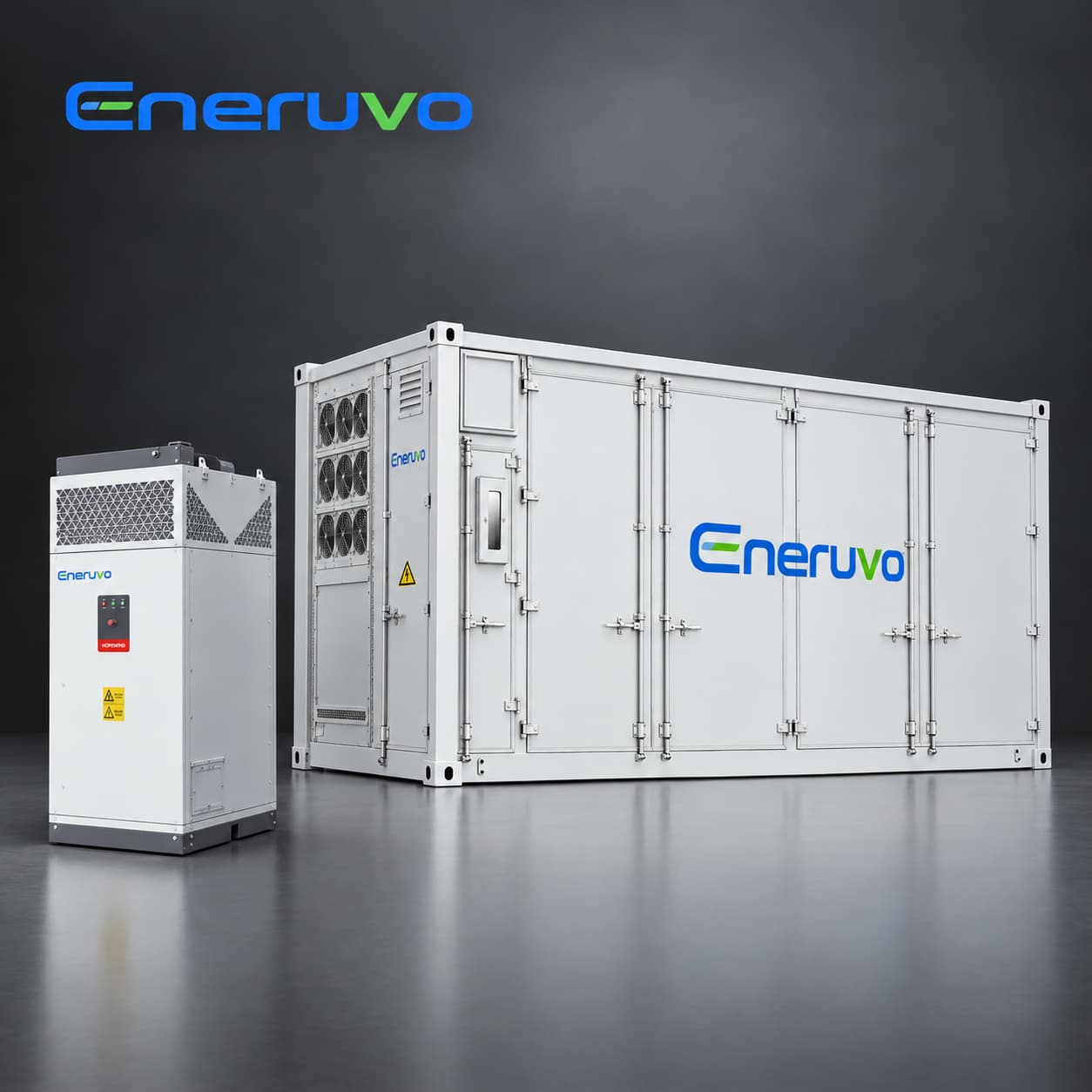
Eneruvo 1.25MW / 2.4MWh Sodium-Ion Containerized BESS
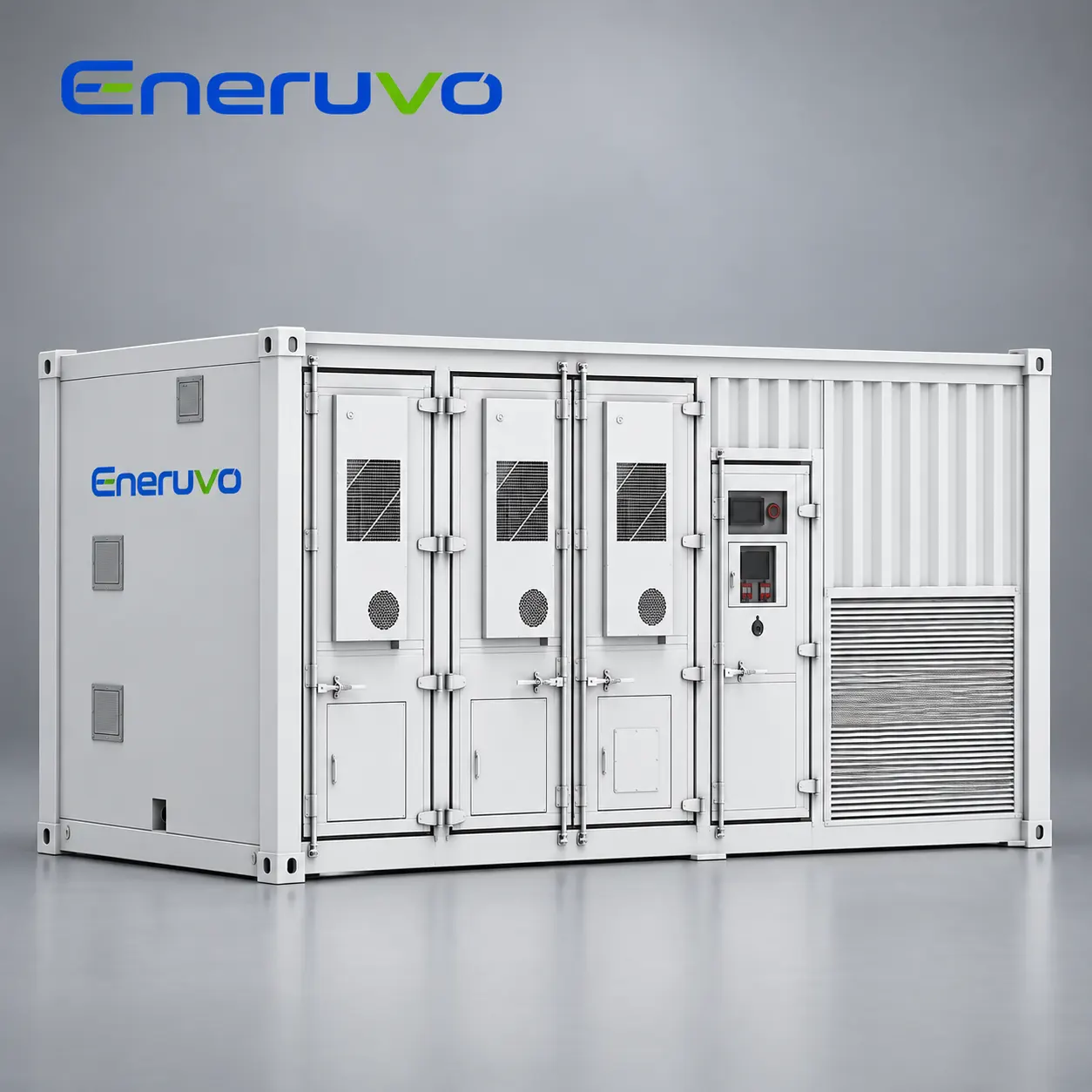
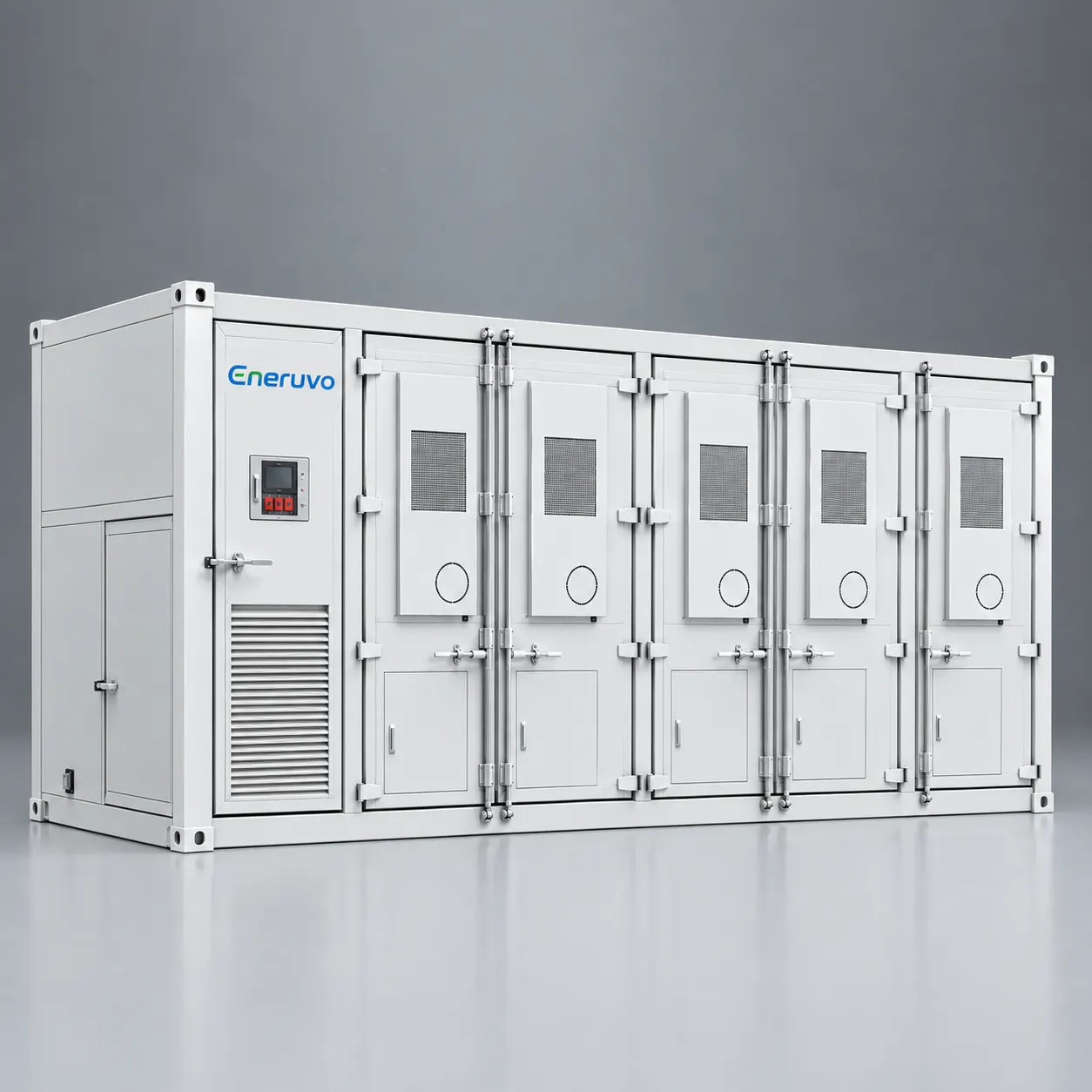
The Eneruvo 1.25MW / 2.4MWh Sodium-Ion Containerized BESS is engineered for large-scale industrial energy storage, renewable integration and microgrid projects. Combining NFPP sodium-ion battery technology, liquid-cooled thermal management and a 1,250kW PCS, the system delivers high-capacity storage in a factory-prepared container. Its modular battery architecture, compact equipment layout and configurable multi-level fire protection support efficient project deployment, flexible system integration and demanding operating environments.
Eneruvo 1.25MW / 2.4MWh sodium-ion containerized BESS
Engineered for High-Capacity Industrial Energy Storage
The Eneruvo 1.25MW / 2.4MWh Sodium-Ion Containerized Energy Storage System is designed for industrial power management, renewable energy integration and large-scale distributed energy projects.
Built around NFPP sodium-ion battery technology, the system combines a high-voltage battery container, liquid-cooled thermal management and a 1,250kW power conversion system (PCS). The approximately 2.4MWh nominal battery capacity provides an energy storage platform for peak demand management, renewable energy shifting and other industrial energy applications.
The factory-prepared container architecture integrates modular battery assemblies and supporting equipment into a transportable unit. This approach reduces the need for on-site battery assembly and helps simplify installation planning, electrical integration and project commissioning.
With configurable battery layouts, high-voltage DC architecture and industrial-grade PCS protection, Eneruvo offers a flexible foundation for projects requiring substantial storage capacity within a defined installation footprint.
Designed Around Five Engineering Priorities
1. High-Capacity Sodium-Ion Storage
The battery system uses 170Ah NFPP sodium-ion cells in modular assemblies. Twelve battery clusters provide a stated nominal energy capacity of approximately 2.418MWh, marketed as a 2.4MWh-class system.
This configuration is intended for industrial and infrastructure projects requiring substantial energy storage within a single containerized battery unit.
2. Liquid Cooling and Temperature Uniformity
The battery container uses liquid cooling to support thermal management across the battery assemblies. The design target is a temperature difference of less than 5°C throughout the battery container under specified operating conditions.
Consistent battery temperature management can help support predictable system operation. Actual temperature uniformity depends on ambient conditions, charge and discharge power, coolant conditions and system control settings.
3. Layered Fire Protection Design
A three-level fire protection architecture can be configured to provide coordinated safety monitoring and response. The final design should define the protection measures at each level, including detection, electrical isolation, alarm coordination and suppression equipment where applicable.
Protection functions and compliance claims are confirmed against the final system design and applicable certification scope.
4. Factory-Prepared Modular Integration
The prefabricated container design brings the battery assemblies and associated equipment together before delivery. Modular battery arrangements support manufacturing consistency, simplified site installation and project-specific engineering.
Compared with systems requiring extensive on-site battery assembly, factory integration can reduce field assembly work, although foundations, cabling, AC connections, communications and commissioning remain project-dependent.
5. Compact PCS and Flexible System Layout
The 1,250kW liquid-cooled PCS has a specified footprint of approximately 1,000 × 1,500mm in width and depth, with a height of 2,428mm. Its compact layout supports equipment integration and transportation planning.
The PCS supports a 690V AC interface and a 1,000–1,500V DC operating window. Final battery-to-PCS voltage compatibility must be verified during system engineering.
Power Conversion and System Control
The system incorporates a 1,250kW-rated PCS with a specified maximum output power of 1,375kW. Its power conversion architecture is designed for industrial energy storage applications requiring controlled battery charging and discharging and integration with compatible electrical infrastructure.
The supplied PCS specification includes grid-connected operating parameters, off-grid output parameters and communication interfaces for industrial control integration. The actual operating modes available in the completed BESS depend on the selected control strategy, protection coordination, external switching equipment and project requirements.
Supported communication protocols include Modbus TCP, Modbus RTU, IEC 61850, IEC 104 and CAN 2.0, subject to the final equipment configuration.
Typical Applications
Industrial Energy Management
Store energy during suitable periods and discharge it to support industrial load management and peak demand reduction, subject to the selected EMS strategy and tariff structure.
Renewable Energy Integration
Integrate compatible solar PV or other renewable generation with battery storage to help balance generation and demand. Renewable integration equipment and controls are configured according to the project design.
Industrial Microgrids
Provide a battery storage resource for industrial microgrids and distributed energy systems. Islanded operation, grid-forming functionality and black-start capability must be confirmed for the complete system before being specified as supported features.
Grid-Connected Energy Storage
Support project-specific energy storage strategies through the PCS, subject to local grid codes, interconnection requirements and approved operating modes.
Infrastructure and Remote Industrial Sites
The containerized format is suitable for evaluating energy storage deployment at industrial and infrastructure sites where centralized equipment integration and a defined installation footprint are important.
System Configuration and Engineering Flexibility
Eneruvo supports project-specific engineering for high-capacity containerized energy storage systems. Configuration options can be evaluated for:
- Battery module arrangement and cluster configuration
- DC voltage matching between the battery and PCS
- Liquid-cooling system requirements
- Fire protection and electrical safety coordination
- AC connection and transformer integration
- Grid interconnection and operating modes
- EMS, SCADA and communication interfaces
- Container positioning, maintenance access and cable routing
- Environmental protection and anti-corrosion requirements
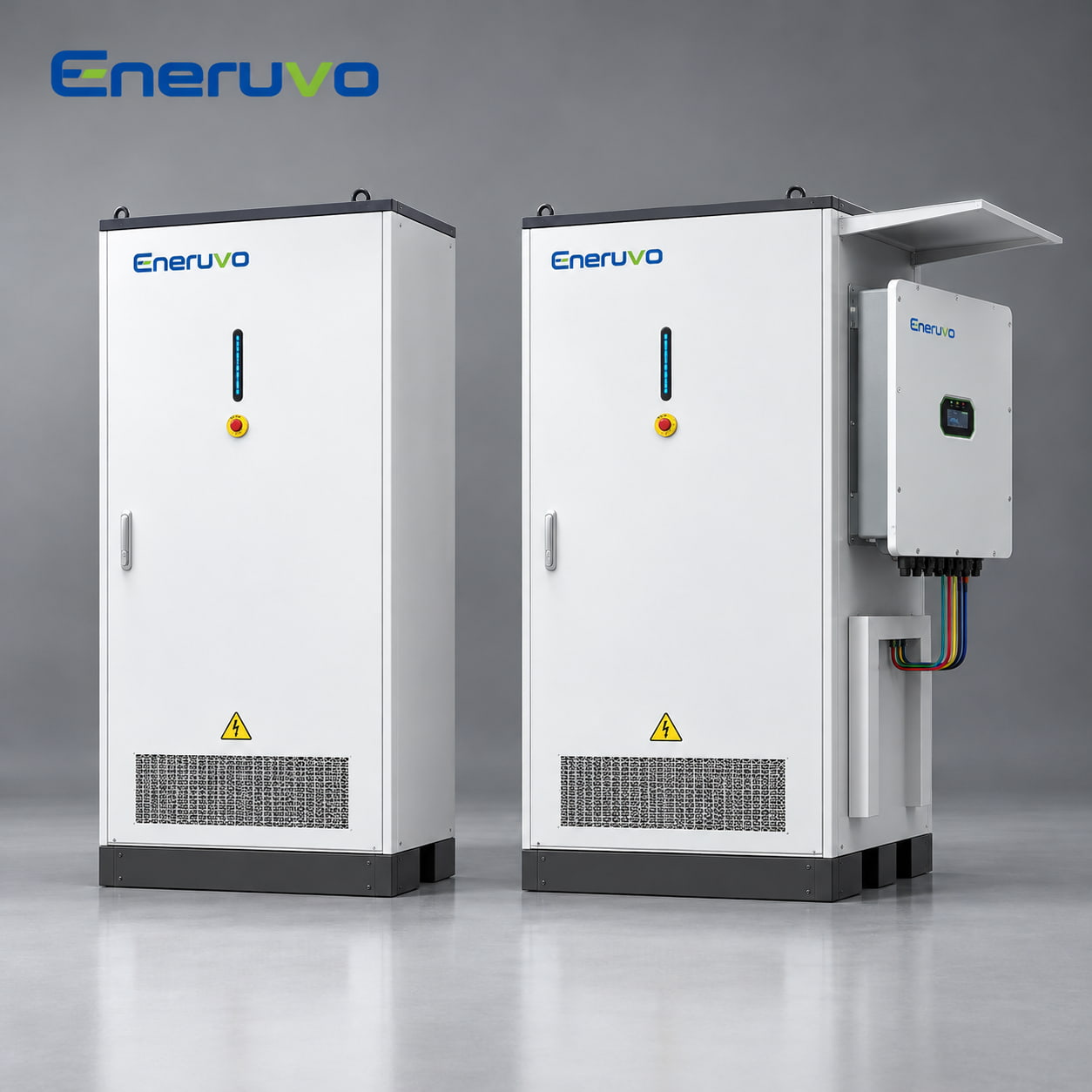
The battery container and PCS are specified as separate equipment assemblies. Their mechanical arrangement, electrical interfaces, auxiliary power requirements and control coordination should be confirmed before final system approval.
Technical Specifications and Validation
The battery container has a stated nominal cluster voltage of 1,185.6Vdc and a listed cluster voltage range of 624–1,456Vdc. The PCS DC operating range is specified as 1,000–1,500Vdc.
These voltage ranges do not fully overlap. The battery operating window, minimum permissible DC voltage, usable state-of-charge range and PCS operating limits must therefore be reconciled before confirming the system’s full discharge range and rated power capability.
The nominal battery energy is approximately 2.418MWh based on the supplied cluster configuration. Actual usable energy depends on battery operating limits, conversion losses and the final system design.
Product dimensions, protection ratings, environmental limits, fire protection functions and certifications should be confirmed against the approved bill of materials and applicable test documentation.
Why Choose Eneruvo?
Eneruvo focuses on project-oriented energy storage integration, combining modular battery architecture, power conversion equipment and system-level engineering to meet industrial energy requirements.
From battery and PCS compatibility to thermal management, protection coordination and installation planning, each project can be evaluated according to its electrical infrastructure, operating conditions and energy management objectives.
Contact Eneruvo to discuss system configuration, technical documentation and integration requirements for your energy storage project.
| Parameter | Specification |
|---|---|
| Brand | Eneruvo |
| Product type | Sodium-Ion Containerized BESS |
| Rated PCS power | 1,250kW |
| Maximum PCS output power | 1,375kW |
| Nominal battery energy | 2,418.624kWh, approximately 2.4MWh |
| Battery chemistry | Sodium-ion, NFPP |
| Cell capacity | 170Ah |
| Battery cluster quantity | 12 |
| Cooling method | Liquid cooling |
| Battery container protection | IP54 |
| PCS protection | IP66 |
| PCS rated AC voltage | 690V |
| PCS DC operating range | 1,000–1,500V |
| Fire protection | Three-level architecture; final configuration to be confirmed |
| Installation | Factory-prepared containerized system |
| Typical applications | Industrial BESS, renewable integration, microgrid |
| System operating modes | Subject to final system configuration |